

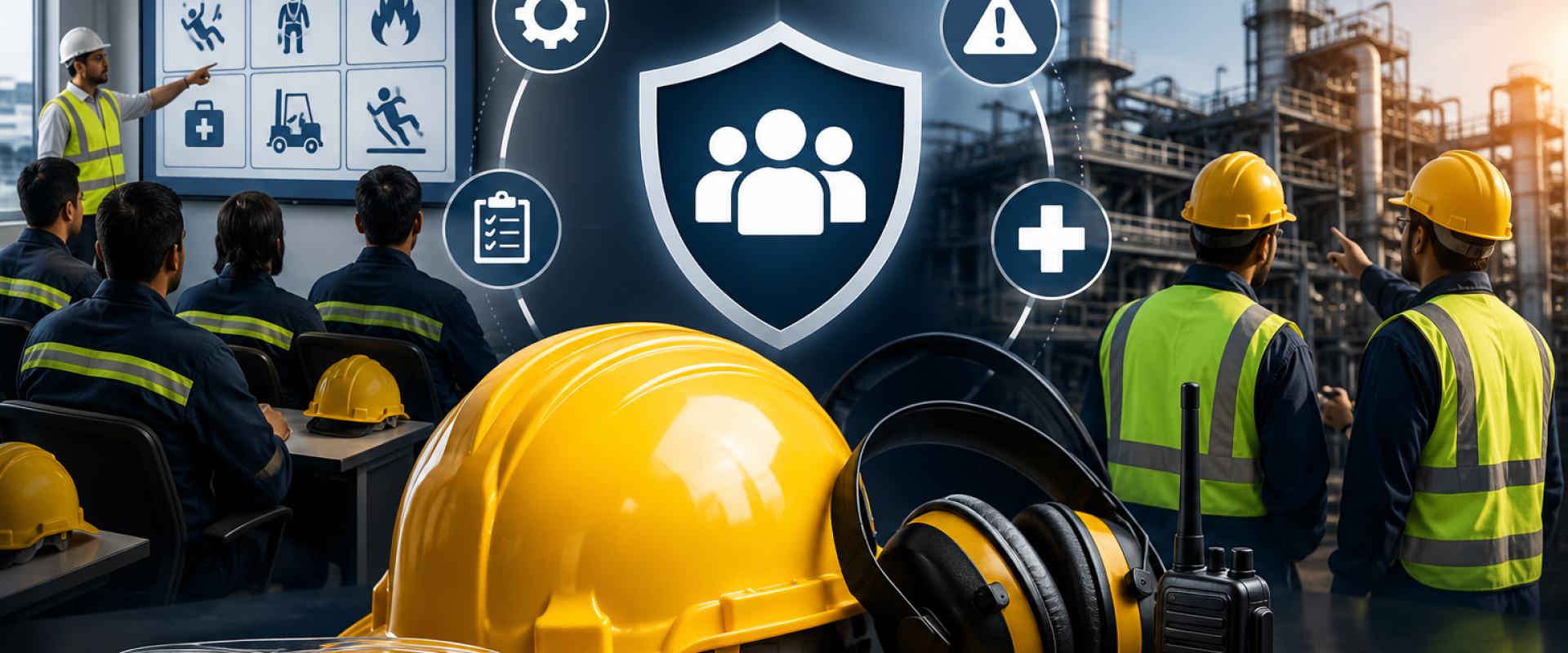
Industrial Safety Training Programs for Safer Workplaces
In today’s fast-paced industrial and construction environments, workplace safety is no longer optional. Organizations across industries are investing in professional safety trainings to reduce risks, improve compliance, and protect employees from workplace hazards. From construction sites and manufacturing plants to oil & gas facilities, effective safety training programs help create a proactive safety culture and improve operational efficiency.
At Hawksvale UK Pvt. Ltd, we provide industry-focused safety training solutions designed to enhance workforce competency, strengthen compliance, and minimize incidents across high-risk work environments.
Businesses looking for professional EHS consultancy and safety training support can also connect through our official Google Business Profile: Hawksvale UK Pvt Ltd on Google
Why Safety Training is Important
Safety training is essential for preventing accidents, reducing downtime, and ensuring legal compliance. Properly trained employees are more aware of workplace hazards and are better equipped to respond during emergencies.
Key Benefits of Safety Training
- Reduces workplace incidents and injuries
- Improves employee awareness and accountability
- Enhances compliance with safety regulations
- Builds a strong safety culture
- Increases operational productivity
- Minimizes equipment damage and downtime
Organizations that regularly conduct safety training programs often experience improved workforce confidence and better risk management practices.
Major Safety Training Programs for Industries
General Safety Training
General safety training is the foundation of workplace safety awareness. It introduces employees to basic safety rules, PPE usage, emergency procedures, and safe work practices.
Topics Covered:
- Workplace hazards
- PPE awareness
- Safe behavior practices
- Incident reporting
- Emergency contacts and procedures
Work at Height Training
Falls from height remain one of the leading causes of workplace injuries. Work at height training helps employees understand fall protection systems and safe access practices.
Includes:
- Full body harness usage
- Anchor point inspection
- Ladder and platform safety
- Rescue procedures
- Fall prevention methods
Scaffolding Safety Training
Scaffolding activities involve high-risk operations that require proper inspection and safety awareness.
Training Focus:
- Scaffold inspection
- Tagging systems
- Load capacity awareness
- Safe erection and dismantling
- Compliance requirements
Fire Safety Training
Fire emergencies can cause severe damage to people, property, and operations. Fire safety training helps employees respond quickly and effectively during fire incidents.
Important Modules:
- Fire classifications
- Fire extinguisher usage
- Evacuation procedures
- Fire prevention practices
- Emergency coordination
First Aid & Emergency Response Training
Quick medical response during emergencies can save lives. First Aid and Emergency Response training prepares employees to handle workplace injuries and medical emergencies.
Training Covers:
- CPR basics
- Bleeding control
- Burn management
- Emergency evacuation
- Rescue coordination
Electrical Safety Training
Electrical hazards are among the most dangerous workplace risks. Proper training helps prevent shocks, arc flashes, and electrical fires.
Key Learning Areas:
- Isolation procedures
- Electrical hazard identification
- Safe equipment handling
- Lockout/tagout procedures
- Electrical PPE usage
HIRA Training (Hazard Identification & Risk Assessment)
HIRA Training enables employees and supervisors to identify workplace hazards before incidents occur.
Main Objectives:
- Risk identification
- Hazard categorization
- Risk mitigation planning
- Safety control implementation
- Workplace inspection techniques
Permit to Work (PTW) Training
Permit-to-work systems are critical for controlling hazardous activities in industries.
PTW training includes the following:
- Hot work permits
- Confined space permits
- Electrical isolation permits
- Excavation permits
- Permit authorization procedures
Behaviour-Basedd Safety (BBS) Training
Behaviour-based safety training focuses on improving employee behavior and promoting a positive safety culture.
Benefits:
- Encourages safe behavior
- Reduces unsafe acts
- Improves communication
- Strengthens leadership involvement
- Enhances employee participation
Confined Space Safety Training
Confined spaces present serious risks, including toxic exposure, oxygen deficiency, and entrapment hazards.
Training Topics:
- Gas testing procedures
- Entry permits
- Rescue plans
- Ventilation requirements
- Communication protocols
Additional Specialized Safety Trainings
Modern industries require specialized EHS training programs based on operational risks and compliance standards.
Other important trainings include the following:
- Defensive Driving Training
- Machine Safety Training
- Process Safety Management (PSM) Training
- Industrial Hygiene Awareness Training
- Disaster Management Plan Training
- Chemical Safety Training
- Lockout/Tagout (LOTO) Training
- Ergonomics Training
- Incident Reporting (IR) Training
- Mock Drill Exercises
- Construction Safety Training
- Rigging & Lifting Safety Training
- Signaling Training
These programs help organizations improve operational safety while maintaining regulatory compliance.
The Role of Modern Technology in Safety Training
Advanced technologies are transforming industrial safety training methods. Organizations now use:
- VR-based safety simulations
- AI-powered safety monitoring
- Digital learning platforms
- Interactive toolbox talks
- Real-time hazard identification systems
Technology-driven training improves employee engagement and practical learning outcomes.
How to Choose the Right Safety Training Provider
Selecting the right safety training partner is important for effective implementation and long-term safety improvement.
Consider the Following:
- Industry expertise
- Qualified trainers
- Customized training modules
- Practical demonstrations
- Compliance knowledge
- Post-training assessment support
At Hawksvale UK Pvt. Ltd., we provide customized EHS and safety training programs tailored to industrial, construction, manufacturing, oil & gas, and infrastructure sectors.
Conclusion
A strong safety culture starts with proper training. Whether it is fire safety, work at height, PTW, HIRA, or emergency response, regular industrial safety training helps organizations protect their workforce and improve operational reliability.
Investing in professional safety training not only reduces risks but also strengthens compliance, productivity, and employee confidence. Businesses that prioritize safety training today build safer and more sustainable workplaces for the future.
Frequently Asked Questions (FAQs)
What is industrial safety training?
Industrial safety training is a structured program designed to educate employees about workplace hazards, safety procedures, emergency response, and compliance requirements.
Why is safety training important in construction and manufacturing industries?
Safety training helps reduce accidents, improve hazard awareness, ensure legal compliance, and protect workers in high-risk environments.
What is HIRA training?
HIRA stands for Hazard Identification and Risk Assessment. It helps employees identify workplace hazards and implement preventive control measures.
How often should safety training be conducted?
Safety training should be conducted regularly based on company policy, legal requirements, operational risks, and new employee onboarding schedules.
What industries require safety training programs?
Industries such as construction, manufacturing, oil & gas, logistics, infrastructure, power plants, and chemical processing require regular safety training programs.
What is included in emergency response training?
Emergency response training includes evacuation procedures, rescue techniques, first aid, fire response, communication protocols, and mock drills.